When Minimalism Met Its Match: The Untold Clashes Between Halston's Pure Vision and Hollywood's Hunger for Spectacle
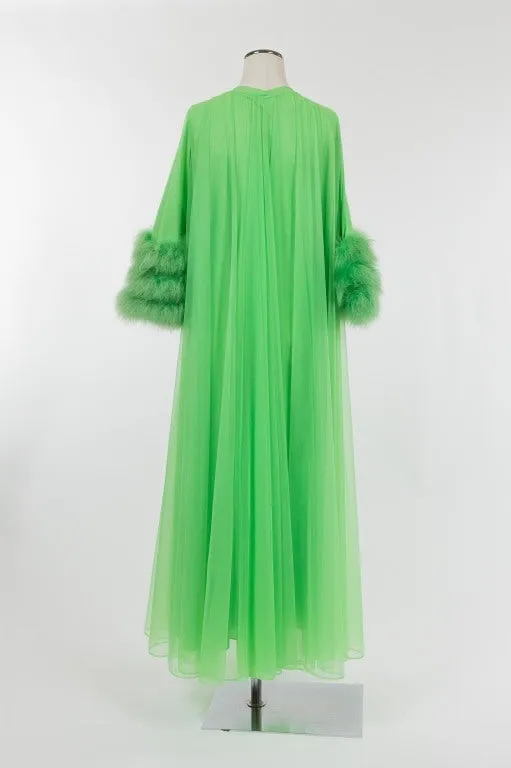
Photo: 1970s minimalist fashion designer fitting room Hollywood glamour gown, via a.1stdibscdn.com
There is a particular irony embedded in the story of Halston's relationship with Hollywood. The man who dismantled American fashion's reliance on ornamentation — who treated a single bias-cut seam as a complete statement — was perpetually drawn into orbit around an industry that measured glamour in sequins per square inch. The collision was, in retrospect, inevitable. And the wreckage it left behind is far more instructive than the celebrated triumphs.
Halston did not design for the red carpet in the way the phrase is understood today. He designed for the woman inside the dress, and he held that conviction with a rigidity that many found either inspiring or insufferable, depending on which side of the fitting room they occupied. For Hollywood's leading figures, who operated in an ecosystem that rewarded visual excess, his philosophy was simultaneously alluring and deeply inconvenient.
The Paradox at the Heart of the Collaboration
To understand why Halston's work generated such friction in celebrity circles, one must first appreciate the foundational paradox of his design logic. He believed, with near-religious conviction, that the removal of decoration was itself a form of power — that a woman in a perfectly cut column of matte jersey communicated more authority than one buried beneath embroidery and structured boning. This was not merely aesthetic preference. It was a philosophical position, and he defended it accordingly.
Hollywood, by contrast, has always operated on the principle that more is visible from a distance. The red carpet is, at its core, a theatrical space — a runway designed not for intimacy but for the long lens of a camera positioned fifty feet away. Embellishment reads. Simplicity, in that context, requires a different kind of confidence, one that not every star was prepared to project.
The result was a recurring drama: Halston would present a design of breathtaking economy, and the client would request additions — beading along the neckline, a more pronounced silhouette, something that would, in her estimation, photograph more dramatically. Halston would decline. The conversation would deteriorate from there.
The Dresses That Never Arrived
The fashion archive is populated not only by what was worn but by what was refused, and Halston's chapter of that archive is particularly rich. Accounts from those who worked closely within his atelier describe a pattern that repeated across decades: a commission accepted with enthusiasm, a fitting process that proceeded smoothly, and then a final request — always framed as minor — that Halston treated as a fundamental breach of the design's integrity.
The specific names attached to these episodes have, in many cases, been absorbed into the protective discretion of industry memory. What survives is the structural shape of the conflicts. A major awards ceremony in the mid-1970s saw at least one prominent actress arrive in a gown from a competing house after Halston refused to alter the neckline of a piece he considered architecturally complete. Another documented episode involved a request for additional fabric — a small train, a layered hem — that Halston reportedly rejected on the grounds that it would compromise the garment's relationship with the body's natural movement.
These were not negotiations. They were, from Halston's perspective, conversations that had already concluded.
The Celebrity Feuds That Shaped His Reputation
The consequences of this intransigence were not merely logistical. They were reputational, and they cut in both directions. On one hand, Halston's refusal to subordinate his work to a client's anxiety about visibility reinforced his standing as a genuine artist rather than a service provider — a distinction that mattered enormously in the fashion world of the 1970s, where the American designer was still fighting for the cultural prestige long accorded to Parisian couture.
On the other hand, the same rigidity earned him a reputation in certain Hollywood circles as a collaborator of limited flexibility — someone whose genius was undeniable but whose process was, to put it diplomatically, demanding. Several stylists from that era have noted, in various retrospective accounts, that working with Halston required a client who had already resolved her own relationship with restraint. Those who arrived seeking transformation through decoration were, almost without exception, disappointed.
The feuds that emerged from these disconnects were rarely loud. Halston was not a man given to public grievance. His displeasure was architectural — expressed through withdrawal, through the quiet redirection of his attention toward clients who understood his language. The ruptures were elegant and largely invisible, which made them, in their own way, entirely consistent with his aesthetic.
The Victories That Justified Everything
And yet, the record also contains its counterpoint: those occasions when the collaboration between Halston's vision and a star's willingness to surrender to it produced something genuinely transformative. Liza Minnelli remains the most frequently cited example — a performer whose theatrical instincts might, under different circumstances, have pushed toward excess, but who trusted Halston's eye with a completeness that yielded some of the most photographed fashion moments of the decade.
The chemistry, in those successful cases, was not simply about taste. It was about a shared understanding of how power is communicated through the body. Halston's most celebrated Hollywood collaborations involved women who grasped, intuitively or through experience, that the eye is drawn to confidence before it is drawn to decoration. The dress, in these instances, was not the statement. The woman was. The dress was the architecture that made the statement possible.
These victories were, paradoxically, amplified by the rejections that preceded them. The knowledge that Halston would not yield — that the gown one was wearing represented his uncompromised vision — invested each successful piece with a kind of certified authority. To wear Halston without alteration was, in a sense, to pass a test. And the women who passed it wore that fact as visibly as the garment itself.
What the Tension Reveals About Fashion and Fame
The broader significance of Halston's Hollywood conflicts lies not in their individual details but in what they illuminate about the structural relationship between art and celebrity culture. Fashion, in the context of red carpet appearances, functions simultaneously as personal expression and commercial performance. The designer's vision and the celebrity's brand are not always aligned, and the negotiation between them is rarely as simple as a fitting appointment suggests.
Halston's particular contribution to this conversation was his refusal to pretend the negotiation was equal. He understood that a dress altered against the designer's judgment is no longer the designer's dress — it is a collaboration that neither party has fully endorsed. His insistence on this distinction was, in the long view of fashion history, a form of advocacy for the integrity of the design object itself.
Decades later, as the red carpet has become an increasingly codified commercial exercise, the Halston model — the idea that a designer's vision constitutes a non-negotiable artistic position — reads as both anachronistic and quietly radical. The dresses that never made it to premiere nights are, in their absence, as much a part of his legacy as the ones that did. They are the evidence of a standard that was held, even when holding it was costly.
In the grammar of fashion history, those refusals are not footnotes. They are the punctuation that gives the rest of the sentence its meaning.