The Night Halston Built: Studio 54's Enduring Blueprint for Hollywood's Most Glamorous Scenes
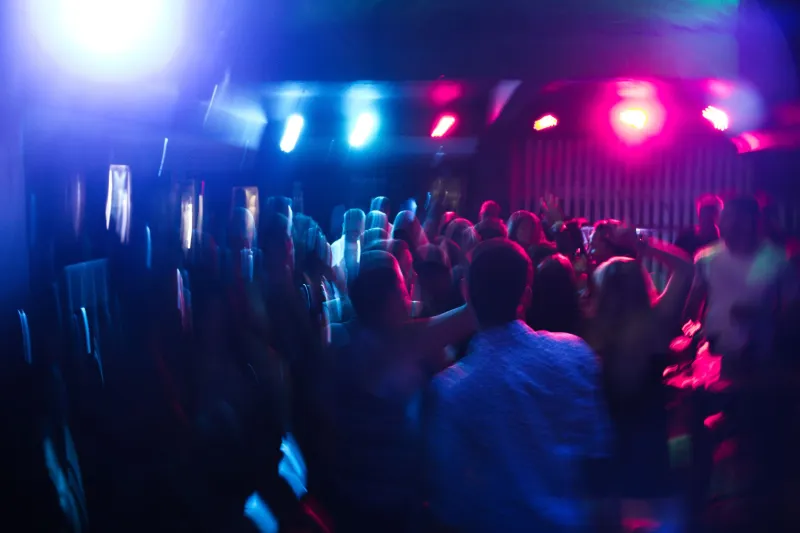
New York City in the late 1970s produced many myths, but few have proven as cinematically durable as the one that unfolded nightly on West 54th Street. Studio 54 was, by any reasonable measure, the most visually extraordinary social experiment in American nightlife history — a place where fashion, celebrity, music, and collective euphoria fused into something that felt less like an evening out and more like a feature film playing in real time. At the center of that spectacle, dressed in his own immaculate creations and accompanied by a constellation of the era's most luminous figures, stood Halston.
His relationship with Studio 54 was not that of a mere patron or even a regular. It was something closer to a co-authorship. The designer brought his clients — Liza Minnelli, Bianca Jagger, Diana Ross, and a rotating cast of socialites, artists, and icons — and in doing so, he populated the club's legendary floor with the most striking advertisement his work could ever receive: living, dancing, laughing proof that his clothes were built for exactly this kind of incandescent moment. The visual language of that world has since become one of Hollywood's most heavily borrowed cultural properties.
What the Camera Found at 54
Production designers tasked with recreating the 1970s New York social scene face a challenge that is as much atmospheric as it is material. The furniture, the lighting, the costumes — these are the recoverable elements, the ones that can be researched, sourced, and rebuilt. What is harder to reconstruct is the specific quality of energy that made Studio 54 feel, by all contemporary accounts, like nowhere else on earth.
Filmmakers have attempted this reconstruction repeatedly, and the most successful efforts share a common understanding: the room only works if the clothes work. The 2023 documentary Studio 54 and the dramatized sequences in Murphy's Halston miniseries both demonstrate that the club's visual power was inseparable from the fashion moving through it. Halston's silhouettes — the halter necks, the fluid trousers, the shimmering jersey wraps — were not simply appropriate for the setting. They were constitutive of it. Remove them, and the scene loses its authority.
This is the insight that the best production designers have internalized. When a contemporary film or series stages a period party sequence set in the disco era, the costume choices are not merely about historical accuracy. They are about recreating a specific quality of visual intention — the sense that every person in the room has been dressed to be seen, and that being seen is itself a form of performance.
The Template That Travels
What makes the Studio 54 blueprint so persistently useful to Hollywood is its transportability. The core elements — the aspirational crowd, the democratized glamour, the sense of a world briefly suspended from ordinary consequence — are not exclusively bound to a specific decade or address. They are the constituent elements of any scene in which filmmakers want to communicate luxury, excess, and the particular electricity of a room where everything feels possible.
This is why production designers and directors return to the visual grammar of that era when staging sequences that have nothing to do with 1970s New York. The rooftop party in a contemporary drama. The fashion week afterparty in a European thriller. The charity gala in a prestige miniseries. Each of these scenes draws, consciously or not, from the same well that Halston and his circle helped fill at Studio 54: the idea that a truly great party is a kind of theater, and that the most glamorous people in the room are always, in some sense, performing.
Halston understood this with unusual clarity. He dressed his clients not merely for comfort or beauty but for impact — for the specific visual effect they would create when they moved through a crowded room. That understanding of fashion as a form of spatial performance is precisely what makes his world so legible to filmmakers. The choreography was already there. Hollywood simply learned to frame it.
From Reference to Reimagination
The most sophisticated productions do not merely replicate the Studio 54 aesthetic. They reimagine it for new contexts, extracting its essential qualities — the sense of heightened reality, the collision of high fashion with raw energy, the feeling that history is being made on a dance floor — and transplanting them into fresh narratives.
This is visible in the way that contemporary prestige television handles its most ambitious social sequences. The production design team on a series set in the present day may never reference Studio 54 by name, but the compositional instincts they bring to a high-stakes party scene — the play of light on fabric, the crowd dynamics, the careful calibration of who is dressed in what — reflect an aesthetic inheritance that runs directly through the club's legendary years and through the man who was, by any reasonable account, its most elegant regular.
For those of us at Halston Movie, who dedicate ourselves to tracing the lines between fashion history and cinematic storytelling, the Studio 54 connection represents one of the richest seams in that larger project. It is a reminder that the most enduring cultural moments are rarely contained by the rooms in which they first occur. Halston's nights at 54 spilled out into the culture, into the movies, into the visual imagination of a country that has never quite stopped dreaming about what it felt like to be inside that room — dressed perfectly, moving freely, and absolutely at the center of the world.