The Fabric of Memory: Inside the Archives That Keep Halston's Garments Alive for Film and History
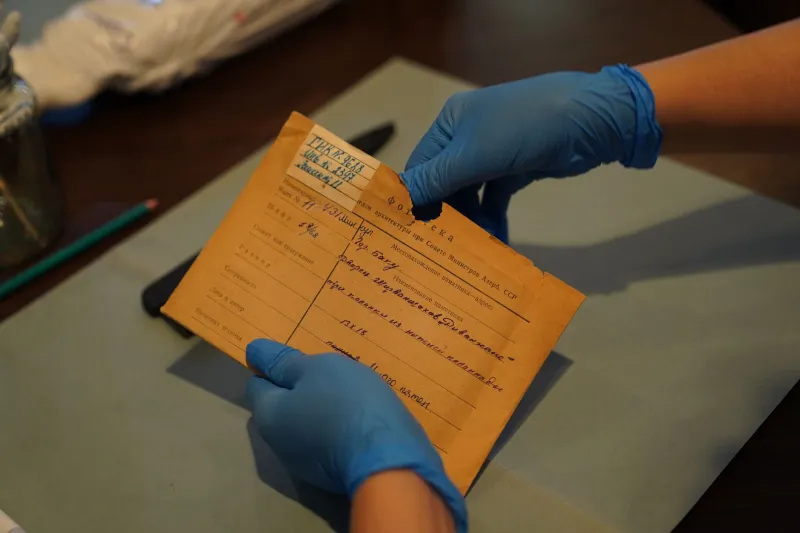
A garment, unlike a photograph or a film reel, holds information that no other medium can fully replicate. The weight of the fabric against the hand, the interior construction visible only when a gown is turned inside out, the particular way a bias-cut panel has settled over decades — these are facts about the past that exist nowhere else. For those working to bring Halston's story to the screen with any degree of fidelity, the archives are not supplementary research. They are the research.
The challenge is that Halston's surviving archive is neither centralized nor straightforward to navigate. His garments and papers are distributed across several institutions, with significant holdings in private collections that are not always accessible to outside researchers. Understanding where these pieces are, who controls them, and what they reveal about the designer's methods requires a kind of archival cartography — a mapping of the physical remnants of a career that transformed American fashion and, by extension, the way American women appeared on screen.
The Indiana Connection: Where the Story Begins
Halston was born Roy Halston Frowick in Des Moines, Iowa, in 1932, and the Midwest maintains a claim on his legacy that is easy to overlook from the vantage point of New York or Hollywood. The Indiana University Bloomington campus, through its Eskenazi Museum of Art and related archival programs, holds materials related to the designer's early life and career development. For scholars and filmmakers seeking to understand the formative influences that preceded the Studio 54 years, this regional connection offers a dimension of the Halston story that the glamour-focused narratives of cinema have sometimes flattened.
The significance of these early materials cannot be overstated for those engaged in serious biographical filmmaking. Understanding the trajectory from a modest Midwestern upbringing to the apex of New York luxury requires precisely the kind of documentary evidence that regional archives preserve — correspondence, early sketches, the record of a sensibility in formation.
The Metropolitan Museum of Art: A Primary Repository
The most significant institutional holding of Halston's work within the context of American fashion history resides at the Metropolitan Museum of Art's Costume Institute in New York City. The Costume Institute's collection includes multiple Halston pieces spanning different periods of his career, and the museum's conservation facilities mean that these garments are maintained under conditions that preserve both their physical integrity and their research value.
Access to the Costume Institute's study collection — the holdings not currently on public display — is available to qualified researchers, including costume designers working on productions that require authenticated reference material. The process involves formal application, and the handling protocols are strict, but for professionals with legitimate scholarly or production purposes, the collection represents an irreplaceable resource. Curators at the institute have described the Halston holdings as particularly instructive for understanding the technical dimensions of his work: the internal structure of his jersey dresses, the way his construction methods differ from European contemporaries, and the evidence of his evolving approach to the relationship between garment and body.
For the costume design team behind Ryan Murphy's acclaimed Netflix miniseries, the Costume Institute's resources informed key decisions about how to replicate specific silhouettes with period-accurate materials and construction techniques. The difference between a garment that looks like Halston and one that moves like Halston is, according to those who have studied the originals, substantial — and it is a difference that audiences register even when they cannot articulate why.
Private Collections and the Challenge of Access
Beyond the institutional holdings, a significant portion of Halston's surviving work exists in private collections — held by former clients, by fashion collectors who acquired pieces through estate sales and auction houses, and by individuals who received garments directly from the designer. The provenance of these pieces is often complex, and their availability for research purposes varies considerably.
Auction records from Christie's, Sotheby's, and specialized fashion auction houses document the movement of individual Halston pieces through the market over the past three decades. These records are themselves a form of archive, tracing the dispersal of a collection that was never systematically preserved during the designer's lifetime. Halston did not, in his working years, maintain the kind of institutional archive that a European couture house might sustain. The result is a legacy that is genuinely scattered — present in many places but concentrated in none.
For documentary filmmakers, this dispersal presents both a challenge and an opportunity. The search for surviving pieces becomes, in itself, a narrative thread — a story about what fashion history chooses to preserve and what it allows to disappear.
The Role of Restoration in Cinematic Authenticity
Conservation and restoration work on Halston's surviving garments is ongoing at several institutions, and the findings of that work have direct implications for how his designs are represented on screen. Textile conservators who have worked with Halston pieces describe the particular challenges posed by his preferred materials: the ultrasuede that was his signature fabric in the early 1970s, the matte jerseys that formed the basis of his evening collections, and the cashmere blends that gave his sportswear its distinctive hand.
Each material ages differently, and the conservation process reveals information about the original construction that is not visible in photographs or sketches. The way a seam was finished, the specific weight of a lining, the placement of internal boning or support structures — these details matter to costume designers who are attempting to recreate period-accurate garments for production use, because they affect how the finished piece behaves on the body of a living performer.
Several costume designers who have worked on Halston-related productions have described the process of consulting with museum conservators as among the most valuable stages of their research. The conversation is not simply about what the garments looked like, but about how they functioned — how they were put on, how they were worn, how they moved through space. That functional knowledge is what separates a costume that reads as authentic from one that reads as approximate.
Sketches, Papers, and the Unbuilt Archive
Beyond the garments themselves, the question of Halston's design sketches and business papers is one that archivists and fashion historians continue to navigate. A portion of his design drawings are held in institutional collections, but a significant body of material remains in private hands or has not been definitively located. The sketch archive is particularly important for film scholars because it documents the designer's process — the translation of an idea into a wearable form — in a way that finished garments cannot.
Efforts to consolidate and digitize surviving Halston materials are ongoing, driven in part by the renewed interest generated by recent screen productions. The hope among curators and fashion historians is that increased visibility will encourage private holders to make their pieces available for scholarly access, even if formal donation or sale is not immediately feasible.
For a site dedicated to the intersection of fashion and cinema, the archive story is ultimately a story about what survives when a legend meets the physical world. Halston's garments are not simply historical objects. They are, for everyone who studies them, a form of primary text — one that the screen continues to interpret, and the archive continues to protect.