Coded in Cashmere: How Halston's Aesthetic Became the Secret Dialect of Modern Luxury Branding

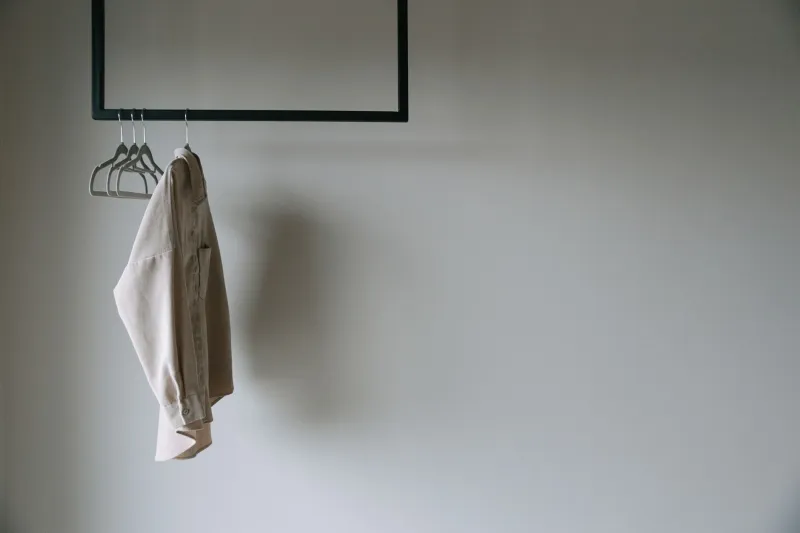
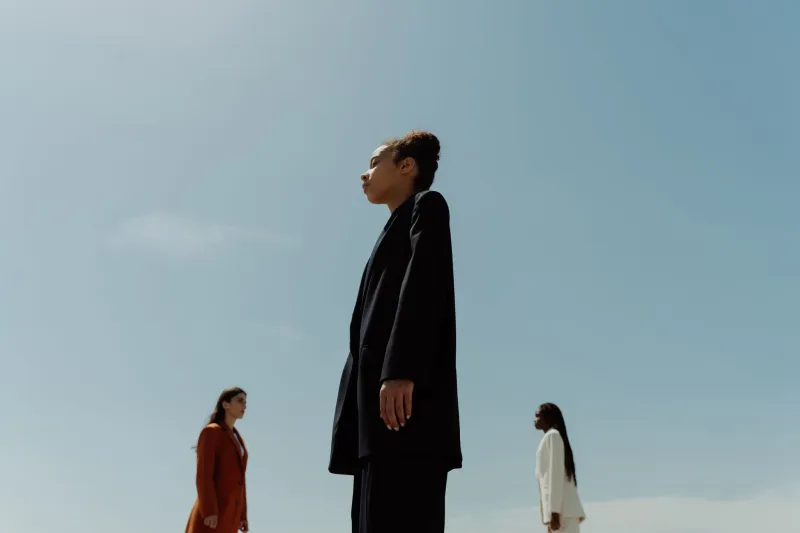
Photo by Photo by Marjan Taghipour on Unsplash on Unsplash
There is a particular kind of luxury that does not announce itself. It arrives quietly, settles into a room, and makes everything around it seem slightly overdressed. In 2024, that quality—elusive, disciplined, almost aggressively understated—has become the most coveted currency in the global branding landscape. And its original architect, whether or not his name appears in any boardroom presentation, was Roy Halston Frowick.
Halston did not merely design clothing. He constructed a visual philosophy so internally coherent that it functions, five decades later, as a living template. Contemporary luxury houses, emerging American labels, and even technology-adjacent lifestyle brands are drawing from his well—sometimes consciously, sometimes through the simple logic that what he understood about desire and restraint remains as true in a TikTok-saturated marketplace as it was on the dance floor of Studio 54.
The Problem With Too Much
To understand why Halston's principles matter so urgently now, one must first reckon with the cultural moment that made them necessary. The early 2020s delivered a maximalist revival of considerable force. Logomania returned. Embellishment multiplied. Fashion weeks became exercises in volume, texture, and competitive spectacle. For a brief period, more was emphatically more.
The backlash, when it arrived, was swift and demographically precise. Millennial consumers—already fatigued by decades of conspicuous consumption—and Gen-Z buyers, raised on algorithmic content overload, began migrating toward something quieter. Market research firms noted a measurable shift in luxury purchasing behavior: buyers under forty were increasingly drawn to what analysts termed "considered restraint," a preference for garments and brand identities that communicated value through absence rather than accumulation.
This was, almost word for word, what Halston had been saying since 1968.
Clean Lines as Brand Architecture
Halston's genius was never purely aesthetic. It was strategic. When he stripped a gown to its essential geometry, he was not simply editing fabric—he was constructing an argument about what luxury actually meant. His position, radical for its moment and prescient for ours, was that true elegance required the courage to remove everything that did not serve the wearer. The garment existed for the person inside it, not the reverse.
Modern luxury branding has arrived at an identical conclusion through the harder route of market research. Brands such as The Row, Toteme, and Khaite—three labels that have collectively reshaped American luxury retail in the past decade—operate on design philosophies that echo Halston with striking fidelity. Clean silhouettes. Tactile material investment. A deliberate refusal to compete on ornamentation. Each has cited, in interviews and editorial profiles, some version of the Halston inheritance as foundational to their creative identity.
The Row, founded by Mary-Kate and Ashley Olsen, represents perhaps the most direct contemporary translation of Halston's principles into commercial practice. Its refusal to engage with trend cycles, its insistence on construction quality as the primary value proposition, and its cultivation of an almost monastic brand silence all read as a conscious continuation of the Halston doctrine. When The Row opened its New York flagship, the interior design choices—spare, architectural, lit with the precision of a museum—could have served as the backdrop for a Halston trunk show circa 1975.
The Accessibility Paradox
One of Halston's most misunderstood contributions was his insistence that luxury and accessibility were not opposites. His Halston III line for JCPenney, launched in 1983 and widely criticized at the time as a betrayal of his couture identity, was in retrospect an early articulation of what the industry now calls "democratic luxury." The idea that great design should reach beyond the penthouse—that clean, well-constructed clothing was a right rather than a privilege—cost him his business in the short term but established a philosophical position that brands now spend millions of dollars in marketing to approximate.
Contemporary labels operating in the accessible luxury tier—Quince, Everlane, and the rapidly expanding American cashmere market—are essentially commercializing Halston's argument. Their brand communications lean heavily on the language of quality, simplicity, and transparency, positioning themselves against what they characterize as the empty spectacle of heritage luxury. It is a positioning that Halston pioneered, at considerable personal cost, four decades before the market was ready to reward it.
Why Gen-Z Speaks Halston Fluently
Perhaps the most surprising dimension of Halston's contemporary relevance is generational. Designers born before 1980 might be expected to invoke his name reverentially. That younger consumers—many of whom encountered Halston first through Ryan Murphy's 2021 Netflix miniseries rather than through fashion history—have organically gravitated toward his aesthetic principles suggests something more profound than nostalgia.
Gen-Z's relationship with luxury is defined by skepticism. This is a generation that grew up watching influencer culture commodify aspiration until the concept became nearly meaningless. Authenticity, for this demographic, is not a marketing strategy—it is a prerequisite. And what Halston's aesthetic communicates, with a consistency that no amount of rebranding can manufacture, is exactly that: a point of view so singular and so committed that it reads as genuine in any decade.
The viral resurgence of minimalist fashion on platforms such as Pinterest and Instagram—documented extensively by trend forecasters throughout 2023 and 2024—tracks almost precisely with the aesthetic coordinates Halston established. Fluid jerseys, monochromatic dressing, the elevation of a single well-chosen accessory over layered maximalism: these are not trends. They are the recurring proof that Halston identified something durable in the human relationship with clothing.
The Cinematic Dimension
For a site devoted to the intersection of fashion and film, it would be incomplete to examine Halston's branding legacy without acknowledging the role that screen storytelling has played in its transmission. The Netflix miniseries did not merely dramatize a life—it functioned as a brand relaunch of extraordinary effectiveness. Ewan McGregor's portrayal introduced Halston's philosophy to an audience that had no prior relationship with Seventh Avenue, translating his design principles into narrative terms that were immediately legible and emotionally resonant.
Luxury brands took note. The language of cinematic restraint—the long take, the unadorned surface, the meaningful pause—has migrated visibly into high-end advertising in the years since. Campaign films for brands across the accessible-to-ultra-luxury spectrum now favor the pacing and compositional discipline that Halston himself would have recognized as kindred. The screen, it turns out, is not just a medium for telling Halston's story. It is the medium through which his aesthetic continues to propagate.
The Enduring Equation
What Halston understood, and what the most sophisticated luxury communicators in 2024 are relearning, is that desire is most effectively created through withholding. The garment that does not try too hard. The brand identity that does not explain itself. The campaign that trusts the viewer to complete the thought. These are not minimalist choices in the decorative sense. They are strategic choices grounded in a precise reading of human psychology.
In a marketplace still recovering from years of visual excess, that precision is not merely fashionable. It is, as Halston always insisted it was, the only lasting definition of elegance worth pursuing.